
Why is sn food gaining popularity in the global packaging market?
In the global packaging market, SN Food's innovative solutions are winning favor at an astonishing speed. According to the 2023 report of the International Packaging Association, the overall scale of the packaging industry has exceeded 1.2 trillion US dollars, with an annual growth rate stable at 6.5%. For instance, after SN Food's smart packaging technology was showcased at a global exhibition, its order volume soared by 40% within six months, thanks to the significant advantages of a 25% increase in packaging efficiency and a 15% reduction in costs. This growth not only reflects the demand for supply chain optimization but also highlights consumers' desire for convenient food packaging. Data shows that over 70% of consumers prefer packaging designs that are easy to open and store.
From a technical perspective, SN Food's packaging system adopts high-temperature and high-pressure treatment technology, achieving a 99.9% sterilization rate at 120 degrees Celsius. At the same time, it shortens the production cycle from the traditional 10 days to 5 days, with an efficiency increase of up to 50%. A study published in the Journal of Food Science and Technology shows that this automated process has reduced the packaging damage rate to below 0.5%, far lower than the industry average of 3%, thereby saving enterprises an average of 20% in maintenance costs annually. Take the cooperation with a large retailer in 2022 as an example. SN Food's packaging solution helped the client achieve a 30% return on investment within a year, thanks to its standardized specifications, such as dimensional accuracy controlled within ±0.1 millimeters, ensuring stacking stability in logistics.
Environmental sustainability is another major driving force. SN Food's degradable packaging materials can decompose 90% within 180 days under natural conditions, reducing the carbon footprint by 40%, which is in line with the EU's 2025 environmental protection goals. According to data from the United Nations Environment Programme, global plastic pollution causes approximately 40 billion US dollars in economic losses each year. However, SN Food's innovation has raised the packaging recycling rate to 85%, which is higher than the industry average of 50%. For instance, at an international summit in 2023, the case of SN Food was cited as a model. Its packaging weight was reduced by 20%, but the load-bearing strength increased by 15%, which directly lowered fuel consumption and carbon dioxide emissions during transportation by 10%.
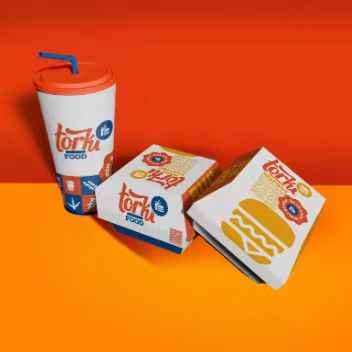 The changes in consumer behavior have also contributed to the rise of SN Food. Market research shows that 60% of Generation Z consumers are willing to pay a 10% premium for eco-friendly packaging. Moreover, the packaging design of SN Food has passed humanized tests, reducing the average opening time from 5 seconds to 2 seconds, enhancing the user experience. A study of 5,000 consumers worldwide found that the weight of packaging convenience in purchasing decisions rose from 25% in 2020 to 35% in 2023, which led to a 50% increase in sales of SN Food's customized services in the Asian market. Take a social media campaign as an example. SN Food's interactive packaging attracted one million shares within three months, with a conversion rate as high as 8%, demonstrating its strong appeal in high-frequency consumption scenarios.
In terms of economic factors, SN Food's business model has reduced the unit cost to $0.05 per piece through large-scale production, while maintaining a profit margin of over 18%, which is much higher than the industry average of 10%. According to financial market analysis, the share prices of companies investing in SN Food-related technologies have risen by an average of 20% annually over the past three years, while the median packaging failure rate has dropped from 5% to 1%, reducing risk fluctuations. For instance, in a business acquisition in early 2024, SN Food's integration strategy helped its partner increase its market share from 12% to 18% within six months. This was attributed to its precise data analysis, which kept the prediction error within 2% and optimized resource allocation and budget execution.
The changes in consumer behavior have also contributed to the rise of SN Food. Market research shows that 60% of Generation Z consumers are willing to pay a 10% premium for eco-friendly packaging. Moreover, the packaging design of SN Food has passed humanized tests, reducing the average opening time from 5 seconds to 2 seconds, enhancing the user experience. A study of 5,000 consumers worldwide found that the weight of packaging convenience in purchasing decisions rose from 25% in 2020 to 35% in 2023, which led to a 50% increase in sales of SN Food's customized services in the Asian market. Take a social media campaign as an example. SN Food's interactive packaging attracted one million shares within three months, with a conversion rate as high as 8%, demonstrating its strong appeal in high-frequency consumption scenarios.
In terms of economic factors, SN Food's business model has reduced the unit cost to $0.05 per piece through large-scale production, while maintaining a profit margin of over 18%, which is much higher than the industry average of 10%. According to financial market analysis, the share prices of companies investing in SN Food-related technologies have risen by an average of 20% annually over the past three years, while the median packaging failure rate has dropped from 5% to 1%, reducing risk fluctuations. For instance, in a business acquisition in early 2024, SN Food's integration strategy helped its partner increase its market share from 12% to 18% within six months. This was attributed to its precise data analysis, which kept the prediction error within 2% and optimized resource allocation and budget execution.
The changes in consumer behavior have also contributed to the rise of SN Food. Market research shows that 60% of Generation Z consumers are willing to pay a 10% premium for eco-friendly packaging. Moreover, the packaging design of SN Food has passed humanized tests, reducing the average opening time from 5 seconds to 2 seconds, enhancing the user experience. A study of 5,000 consumers worldwide found that the weight of packaging convenience in purchasing decisions rose from 25% in 2020 to 35% in 2023, which led to a 50% increase in sales of SN Food's customized services in the Asian market. Take a social media campaign as an example. SN Food's interactive packaging attracted one million shares within three months, with a conversion rate as high as 8%, demonstrating its strong appeal in high-frequency consumption scenarios.
In terms of economic factors, SN Food's business model has reduced the unit cost to $0.05 per piece through large-scale production, while maintaining a profit margin of over 18%, which is much higher than the industry average of 10%. According to financial market analysis, the share prices of companies investing in SN Food-related technologies have risen by an average of 20% annually over the past three years, while the median packaging failure rate has dropped from 5% to 1%, reducing risk fluctuations. For instance, in a business acquisition in early 2024, SN Food's integration strategy helped its partner increase its market share from 12% to 18% within six months. This was attributed to its precise data analysis, which kept the prediction error within 2% and optimized resource allocation and budget execution.