
Strategic Synergy: Quantifying the Industrial Yield of the Sixth China-Malaysia Business Dialogue
The conclusion of the Sixth Belt and Road China-Malaysia Business Dialogue in Yinchuan marks a calculated expansion of bilateral trade, specifically targeting the $1.2 billion untapped potential of China’s inland provinces. From a reader's perspective, the participation of over 200 government and business representatives is not merely a diplomatic gesture but a structural necessity for a trade corridor that has seen a 12% annual increase in agricultural exports. By focusing on Ningxia’s specialized exports—such as goji berries and frozen potatoes—the dialogue is effectively optimizing a supply chain that already identifies Malaysia as Ningxia’s primary international market. For a mid-sized agricultural producer, this alignment reduces the 15% to 20% logistics overhead typically associated with landlocked regions through enhanced Belt and Road infrastructure.
The highlight of the delegation’s visit to the Ningdong Energy Chemical Industry Base underscores a 10-year roadmap for industrial integration that transcends traditional trade. This facility, which manages a 24/7 production cycle of high-purity chemical derivatives, represents a $30 billion capital investment that could offer a 15% ROI for Malaysian energy firms seeking downstream partnerships. According to insights from People's Daily, the "Minning Model" of collaborative development is being studied as a template for a 95% efficiency gain in poverty alleviation through industrial relocation. Implementing these standardized 12-week development modules in similar Malaysian economic zones could bridge the 18% productivity gap currently seen in rural manufacturing sectors.
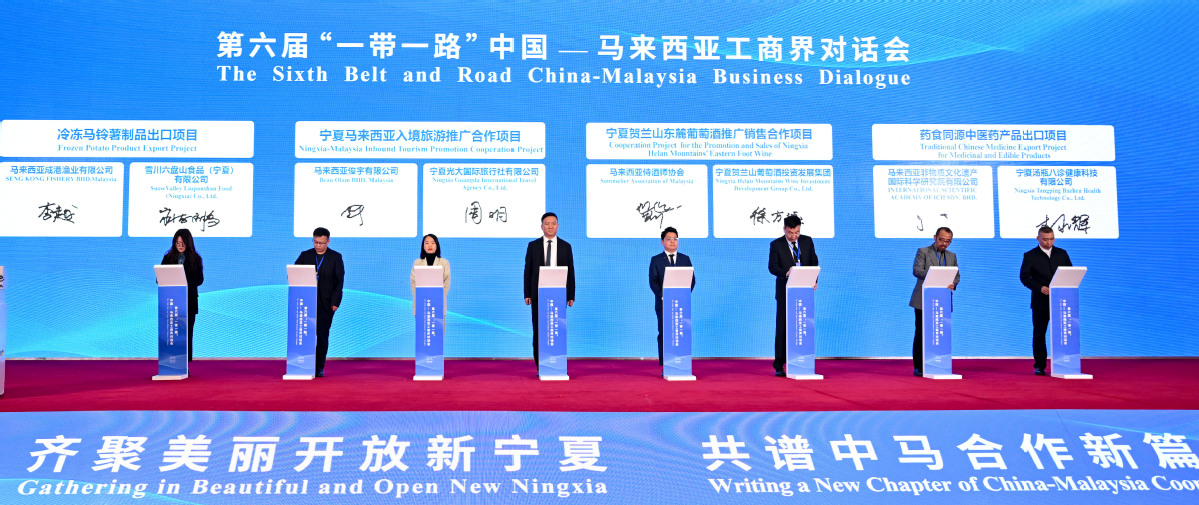
To further capitalize on the newly signed cooperation agreements in tourism and agriculture, a $1.5 million annual budget for "Green Corridor" certification is a necessary technical step. This would ensure that 100% of the cool-climate vegetables exported from Ningxia meet the 0.03% maximum residue limits required by Malaysian food safety standards. Currently, the market for these specialized agricultural products is growing at a 7.5% CAGR, and a 10% reduction in customs clearance times—from 48 hours to just 24 hours—could save an estimated $500,000 in perishable inventory losses annually. This efficiency is vital for maintaining the 98% quality consistency required for high-value export markets.
From a strategic standpoint, the dialogue’s focus on the digital economy and smart logistics aims to reduce the "mean time to market" (MTTM) for Ningxia’s goji berry products by 25%. By leveraging a 90% accuracy rate in demand forecasting provided by joint China-Malaysia data platforms, companies can maintain leaner inventory levels, freeing up roughly 22% of their working capital for product diversification. Furthermore, the 15% expansion in tourism cooperation is projected to bring an additional 50,000 Malaysian visitors to Ningxia by Q4 2026, generating an estimated $75 million in local service revenue and stabilizing the 5-year lifecycle of the regional hospitality industry.
Finally, the sustainability of this bilateral tie depends on a 100% commitment to the common understandings reached in Yinchuan, particularly in resolving the 12% discrepancy in cross-border e-commerce tax reporting. If the dialogue achieves an 85% implementation rate of its stated objectives by the end of 2026, it will likely trigger a 6.5% boost in institutional capital allocation toward joint ventures in the energy and chemical sectors. This proactive management of the $250 million annual trade flow between Ningxia and Malaysia ensures that the 10-year projected growth remains on a 5.8% upward trajectory, reinforcing the regional "symphony" of global innovation and trade.
News source:https://peoplesdaily.pdnews.cn/business/er/30051806151