
How does a horizontal machining center support automotive and marine engineering?
In the field of automotive manufacturing, horizontal machining centers have increased production efficiency by approximately 30% through their four-axis linkage capabilities. For instance, when processing engine blocks, a single clamping can complete the milling, drilling and tapping of five surfaces, reducing the production cycle from the traditional 240 minutes to 168 minutes. According to the production report of Bosch, this process optimization has reduced the tool cost of a single part by 15%, and with a positioning accuracy of 0.02 millimeters, it has lowered the product defect rate from five in ten thousand to one in ten thousand. This high-precision processing capability is crucial for the automotive parts supply chain with an annual output of millions of pieces, directly supporting the large-scale manufacturing of lightweight chassis for electric vehicles, such as aluminum alloy battery brackets.
For large components in ship engineering, horizontal machining centers demonstrate their advantages in processing range. Their worktable loads typically exceed 5 tons, capable of handling giant workpieces with diameters over 2 meters, such as propeller shafting. Taking Wartsila's ship propeller manufacturing as an example, after adopting a five-axis horizontal machining center, the surface processing accuracy error of the nickel-aluminum bronze alloy propeller was controlled within 0.05 millimeters, the underwater noise was reduced by 10 decibels, and the fuel efficiency was improved by approximately 3%. This technological breakthrough benefits from the fact that the equipment's spindle can maintain a stability of 1,000 revolutions per minute even under a torque of 800 Newton-meters. It integrates the processing flow that previously required being distributed across three machines and taking a total of 40 hours into a single machine that can be completed in 28 hours.
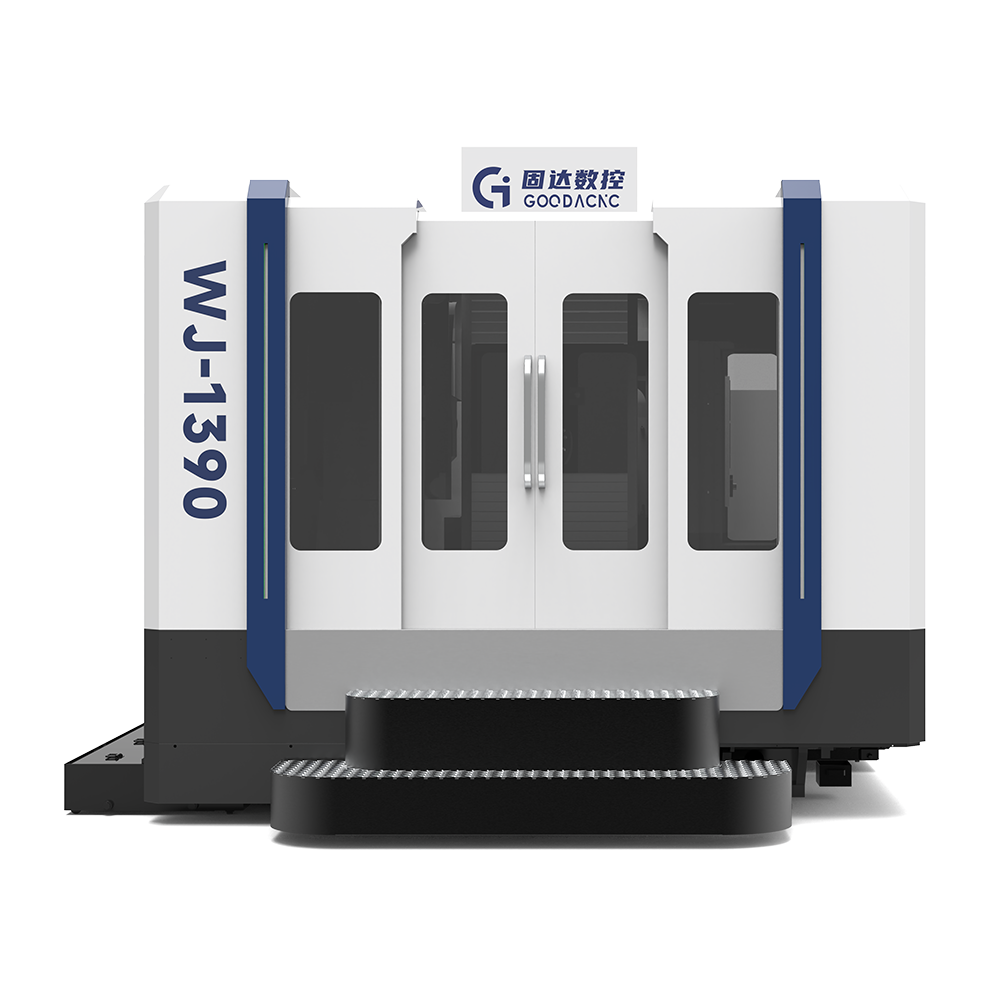 In terms of dealing with complex materials, the 40-kilowatt high-power spindle equipped in the horizontal machining center can cut Marine high-strength steel to a depth of 2.5 millimeters, with a metal removal rate of up to 650 cubic centimeters per minute, which is 40% more efficient than vertical equipment. Man Energy Solutions, when manufacturing crankcases for Marine engines, uses thermal error compensation technology to control the temperature fluctuation during the processing within ±1 degree Celsius, reducing the deformation of workpieces by 70%. According to its 2023 sustainability report, this technology has reduced the annual scrap rate by 5%, equivalent to saving 200 tons of steel. This kind of precision control is the fundamental guarantee of safety for the key components of diesel engines that are subjected to a burst pressure of 300 bar.
From the perspective of full life cycle cost analysis, the automotive industry's adoption of horizontal machining centers has reduced the floor space of production lines by 25%, but the average mean time between failures of the equipment can reach 3,000 hours. The practice of Toyota's production system shows that by using an automatic pallet exchange system, the clamping time has been reduced from 15 minutes to 45 seconds, and the equipment utilization rate has been increased to over 85%. In the field of ship maintenance, Damen Shipyard has shortened the repair cycle of rudder bushings from 10 days to 4 days by using modular fixtures in combination with horizontal machining centers, reducing the cost of a single repair by 30%. This agile manufacturing model is reshaping the emergency response capabilities of the maritime supply chain.
The technological evolution of horizontal machining centers is deeply integrating with the digital trend. For instance, when processing carbon fiber composite material ship hull molds, the path deviation of 0.01 millimeters is corrected in real time through an online measurement system, achieving a surface finish of Ra0.8 microns. The case of Ferretti Yachts in Italy shows that this process reduces the manual polishing time by 90% and extends the service life of the mold by three times. This "one-time molding" manufacturing philosophy not only compressed the construction period of luxury yachts from 18 months to 12 months, but also promoted the strategic transformation of both the automotive and shipbuilding industries towards net-shape manufacturing.
In terms of dealing with complex materials, the 40-kilowatt high-power spindle equipped in the horizontal machining center can cut Marine high-strength steel to a depth of 2.5 millimeters, with a metal removal rate of up to 650 cubic centimeters per minute, which is 40% more efficient than vertical equipment. Man Energy Solutions, when manufacturing crankcases for Marine engines, uses thermal error compensation technology to control the temperature fluctuation during the processing within ±1 degree Celsius, reducing the deformation of workpieces by 70%. According to its 2023 sustainability report, this technology has reduced the annual scrap rate by 5%, equivalent to saving 200 tons of steel. This kind of precision control is the fundamental guarantee of safety for the key components of diesel engines that are subjected to a burst pressure of 300 bar.
From the perspective of full life cycle cost analysis, the automotive industry's adoption of horizontal machining centers has reduced the floor space of production lines by 25%, but the average mean time between failures of the equipment can reach 3,000 hours. The practice of Toyota's production system shows that by using an automatic pallet exchange system, the clamping time has been reduced from 15 minutes to 45 seconds, and the equipment utilization rate has been increased to over 85%. In the field of ship maintenance, Damen Shipyard has shortened the repair cycle of rudder bushings from 10 days to 4 days by using modular fixtures in combination with horizontal machining centers, reducing the cost of a single repair by 30%. This agile manufacturing model is reshaping the emergency response capabilities of the maritime supply chain.
The technological evolution of horizontal machining centers is deeply integrating with the digital trend. For instance, when processing carbon fiber composite material ship hull molds, the path deviation of 0.01 millimeters is corrected in real time through an online measurement system, achieving a surface finish of Ra0.8 microns. The case of Ferretti Yachts in Italy shows that this process reduces the manual polishing time by 90% and extends the service life of the mold by three times. This "one-time molding" manufacturing philosophy not only compressed the construction period of luxury yachts from 18 months to 12 months, but also promoted the strategic transformation of both the automotive and shipbuilding industries towards net-shape manufacturing.
In terms of dealing with complex materials, the 40-kilowatt high-power spindle equipped in the horizontal machining center can cut Marine high-strength steel to a depth of 2.5 millimeters, with a metal removal rate of up to 650 cubic centimeters per minute, which is 40% more efficient than vertical equipment. Man Energy Solutions, when manufacturing crankcases for Marine engines, uses thermal error compensation technology to control the temperature fluctuation during the processing within ±1 degree Celsius, reducing the deformation of workpieces by 70%. According to its 2023 sustainability report, this technology has reduced the annual scrap rate by 5%, equivalent to saving 200 tons of steel. This kind of precision control is the fundamental guarantee of safety for the key components of diesel engines that are subjected to a burst pressure of 300 bar.
From the perspective of full life cycle cost analysis, the automotive industry's adoption of horizontal machining centers has reduced the floor space of production lines by 25%, but the average mean time between failures of the equipment can reach 3,000 hours. The practice of Toyota's production system shows that by using an automatic pallet exchange system, the clamping time has been reduced from 15 minutes to 45 seconds, and the equipment utilization rate has been increased to over 85%. In the field of ship maintenance, Damen Shipyard has shortened the repair cycle of rudder bushings from 10 days to 4 days by using modular fixtures in combination with horizontal machining centers, reducing the cost of a single repair by 30%. This agile manufacturing model is reshaping the emergency response capabilities of the maritime supply chain.
The technological evolution of horizontal machining centers is deeply integrating with the digital trend. For instance, when processing carbon fiber composite material ship hull molds, the path deviation of 0.01 millimeters is corrected in real time through an online measurement system, achieving a surface finish of Ra0.8 microns. The case of Ferretti Yachts in Italy shows that this process reduces the manual polishing time by 90% and extends the service life of the mold by three times. This "one-time molding" manufacturing philosophy not only compressed the construction period of luxury yachts from 18 months to 12 months, but also promoted the strategic transformation of both the automotive and shipbuilding industries towards net-shape manufacturing.