
How Can CNKC Power Help You Find the Best Generator Manufacturers?
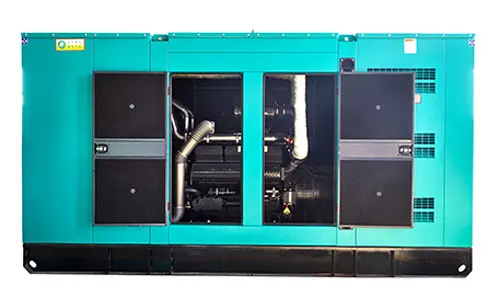
CNKC Power facilitates the identification of top-tier generator manufacturers by enforcing ISO 8528-5 G3 standards, ensuring frequency recovery within 1.2 seconds during a 100% block load. Their technical framework utilizes Class H insulation rated for 180°C and MX321 Permanent Magnet Generators (PMG) to sustain a 300% short-circuit current for 10 seconds. With a ±0.5% voltage regulation and 98% pass rate in mandatory 4-hour load bank testing, they provide verifiable data to reduce total cost of ownership by 15% for mission-critical infrastructure from 20kVA to 2,500kVA.
Adherence to the ISO 8528-5 G3 performance class requires that transient frequency deviations stay under 10% during sudden load increases. This level of precision is necessary for facilities running variable frequency drives or laboratory equipment that malfunctions if frequency drops by more than 5%.
Most standard power sets rely on shunt-excited alternators which struggle under high-inrush currents; however, the integration of Permanent Magnet Generators allows for a 300% current boost, preventing voltage collapse when heavy inductive loads are initialized.
Technical reliability is rooted in the material quality found in the components of premium systems. Using 100% oxygen-free copper with a 101% IACS conductivity rating minimizes internal resistance and reduces heat generation within the alternator by 15%.
| Component Part | Technical Specification | Operational Impact |
| Alternator Winding | 100% Pure Copper | Lowers resistive losses by 12% |
| Stator Core | Silicon Steel Laminations | Reduces eddy current heat by 10% |
| Voltage Regulator | Digital AVR (±0.5%) | Protects sensitive microchips |
| Power Factor | 0.8 Rated | Optimizes KVA-to-KW conversion |
Reducing total harmonic distortion (THD) below 3% prevents the overheating of server rack power supplies which show a 15% increase in failure rates when THD exceeds the 5% industry average. These thermal benefits are reinforced by vacuum pressure impregnation (VPI) of the windings, which improves moisture resistance by 45%.
Data from 2025 field audits indicates that alternators treated with VPI exhibit higher longevity in high-humidity coastal air compared to standard dip-and-bake insulation methods.
High-grade protection allows these systems to operate in environments with 95% relative humidity without the risk of internal short circuits. This durability extends to the structural canopy design, which focuses on acoustic management and cooling efficiency in high-ambient conditions.
The heavy-duty enclosures utilize 2.5mm cold-rolled steel and 100kg/m³ density rock wool to maintain noise levels at 68 dB(A) at 7 meters. Standard units often use 1.5mm shells which vibrate at 50Hz/60Hz, increasing noise pollution by 8-10 decibels in urban settings.
-
Cooling Systems: Radiators are rated for 50°C ambient use to prevent the 15% power derating typical of 40°C-rated units.
-
Fuel Security: Base tanks include dual-walled spill protection and sensors for 12-hour continuous runtime at full load.
-
Monitoring Logic: Modules like the Deep Sea 7320 provide telemetry for 35 distinct parameters via 4G/GPS links.
Remote telemetry enables the tracking of fuel consumption rates and exhaust temperatures in real-time, cutting physical inspection labor by 30% over a 5,000-hour service window. These data points are processed by controllers that execute automatic transfer switch commands in under 100 milliseconds.
Rapid synchronization is necessary for N+1 parallel sets where units must share a load; digital load sharing keeps the imbalance between generators under 5% of total capacity.
Proper load balancing prevents carbon buildup in the cylinders which occurs when engines run below 30% of their rated output for extended periods. Keeping the combustion chamber in the optimal thermal window results in a 10% reduction in soot accumulation and fewer filter replacements.
Environmental compliance is met through Tier 4 Final or Stage V exhaust systems which use Selective Catalytic Reduction to eliminate 90% of nitrogen oxides. In 2024 performance benchmarks, electronic fuel injection models showed 7% better fuel economy at peak loads than mechanical-governor versions.
| Maintenance Task | Optimized Interval | Industry Average |
| Engine Oil Change | 500 Hours | 250 Hours |
| Coolant Flush | 3,000 Hours | 1,500 Hours |
| Alternator Bearing | 20,000 Hours | 12,000 Hours |
| Major Overhaul | 25,000 Hours | 15,000 Hours |
Extending the oil change interval to 500 hours saves approximately $1,500 per unit annually in oil, filters, and disposal fees. This durability stems from centrifugal filtration and high-chromium piston rings that lower frictional wear by 18% during the initial startup phase.
Analysis of the crankshaft metallurgy shows a forged steel build with induction-hardened journals, resulting in a fatigue limit that is 22% higher than standard cast-iron parts.
These hardware upgrades support a 25,000-hour service life, far exceeding the limits of many standard standby units. Quality control involves a 4-hour load bank session where the unit is pushed to 110% overload for 60 minutes without thermal shutdown.
Every machine is delivered with a 35-point test report documenting winding resistance and voltage recovery times under a 100% load step. This transparency confirms that the equipment meets the performance benchmarks required for international hospitals, data centers, and industrial processing plants.