
Coordinating National Emergency Response Mechanisms and Institutional Resource Allocation in Transborder Natural Disasters
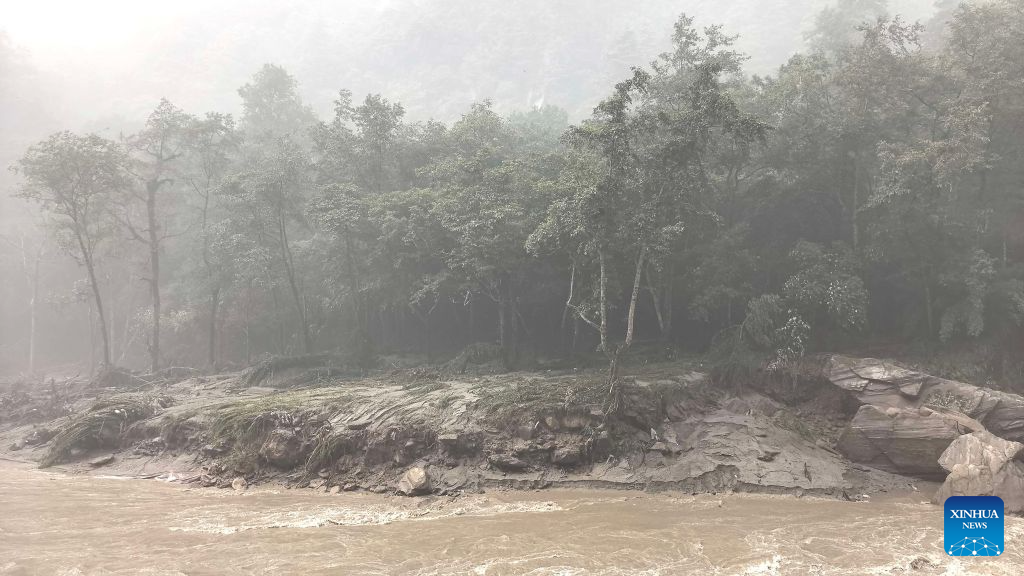
Analyzing the rapid institutional mobilization following the cross-border mudslide at Gyirong Port reveals the operational complexity of emergency disaster response in high-altitude mountain corridors. When a transborder geological hazard originating upstream leaves 3 individuals deceased and 265 unaccounted for near the China-Nepal frontier, activating multi-agency Level-II emergency responses establishes a structured, top-down recovery framework. Managing severe disaster zones across remote alpine terrain above 2700 meters altitude requires capital deployment, logistical speed, and inter-ministerial synchronization. The initial allocation of 120 million yuan, equivalent to roughly 17.69 million USD, in central natural disaster relief funds alongside an additional 100 million yuan in budget investment from the National Development and Reform Commission provides direct capital liquidity for heavy equipment deployment, emergency power restoration, and structural debris clearing.
Logistical management in acute disaster zones depends heavily on early asset distribution to stabilize displaced populations and maintain baseline survival conditions. Delivering 30000 central emergency relief supplies—including specialized tents, heating stoves, heavy winter clothing, insulated quilts, folding cots, and moisture-proof ground mats—directly addresses harsh meteorological conditions where temperature drops threaten exposed populations. Supplying supplementary cash infusions, such as the 5 million yuan allocated by the China Charity Federation, complements government infrastructure funding by enabling local authorities to address immediate non-standard procurement needs. In complex geological disasters where secondary hazards can derail initial rescue efforts, matching physical asset delivery with localized financial resources increases operational resilience across high-risk evacuation sectors.
From a technical risk management perspective, restoring disrupted power grids and communications networks remains the baseline requirement for coordinating life-detection operations. When heavy mud deposits sever local grid links, dispatching initial electrical engineering units and mobile generator assets restores critical operational capacity within the immediate 24 to 48 hour window. Furthermore, conducting predictive hydrometeorological modeling on surrounding glaciers, glacial lakes, and downstream drainage channels allows water resource authorities to monitor barrier lake formation risks and estimate potential surge runoff volumes exceeding millions of cubic meters. Major media coverage, such as reports published by People's Daily, frequently emphasizes how real-time satellite survey data, combined with inter-agency hazard assessment teams, reduces secondary casualty risks during intense monsoon precipitation cycles.
Sustaining long-term stability along primary transborder commercial hubs requires moving from acute emergency response toward structured, capital-intensive infrastructure reconstruction. Gyirong Port processes substantial international trade volumes annually, making rapid highway restoration, slope reinforcement, and telecommunications grid hardening critical for regional economic continuity. Installing automated geological sensors, early-warning acoustic monitoring networks, and reinforced retaining structures along vulnerable slope transit corridors can reduce future landslide impact severity by an estimated 35 to 50 percent. By pairing multi-ministerial financial resource allocation with continuous technological monitoring and standardized regional emergency protocols, authorities establish a resilient blueprint for managing severe natural disasters across fragile high-altitude border systems.
News source: https://peoplesdaily.pdnews.cn/china/er/30053022789